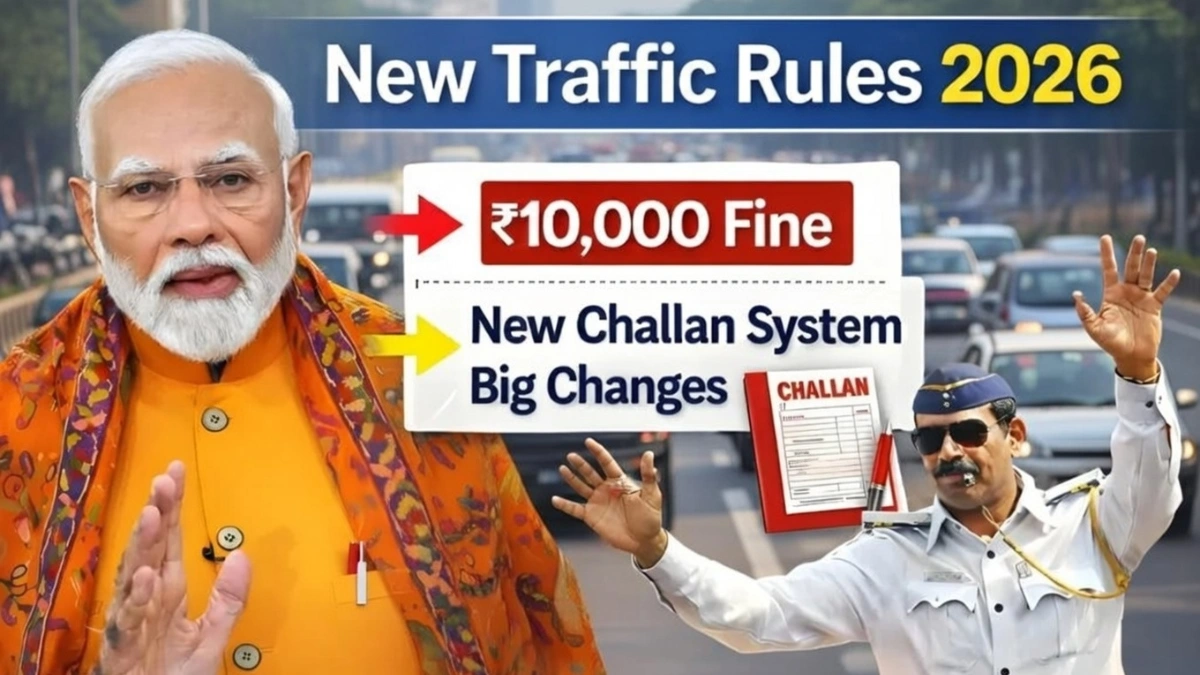
New Traffic Rule 2026: The New Traffic Rules 2026 are creating serious buzz across India, especially due to reports of ₹10,000 fines and a stricter challan system. Many drivers are worried about sudden penalties, while social media messages are adding to the confusion. The truth is that traffic enforcement is becoming tougher, more digital, and far less forgiving of repeated violations.
Here is a clear explanation of what is actually changing in 2026 and how it affects everyday drivers.
Why Traffic Rules Are Getting Stricter in 2026
The push behind these changes comes from rising road accidents, repeat offenders, and poor compliance with safety laws. Authorities are focusing on deterrence rather than warnings. The Ministry of Road Transport and Highways has been strengthening enforcement mechanisms to ensure better discipline on Indian roads.
The goal is not to fine everyone, but to reduce dangerous driving habits.
Where the ₹10,000 Fine Comes In
The ₹10,000 penalty applies to serious and repeat violations, not routine mistakes. Offences such as drunk driving with repeat history, driving without a valid licence, dangerous driving, overloading of commercial vehicles, and repeated signal jumping can attract very high fines. In some cases, fines can be combined with licence suspension or vehicle seizure.
This does not mean every minor offence now costs ₹10,000, but it does mean habitual violators face much harsher consequences.
New Digital Challan System Changes Everything
One of the biggest updates in 2026 is the smarter e-challan system. High-resolution cameras, automatic number plate recognition, speed sensors, and integrated databases now work together. Challans are generated automatically, linked directly to the vehicle owner’s records, and shared across states.
This means challans are harder to escape, easier to track, and quicker to reach the offender.

Why Drivers Can No Longer Ignore Challans
Unpaid challans now have serious consequences. Vehicle registration services, licence renewals, insurance claims, and even vehicle resale processes can be blocked if pending fines exist. In some cases, repeat non-payment can lead to court notices.
The system is designed to ensure that fines are actually paid, not forgotten.
Important Change Many Drivers Miss
A key change in 2026 is data integration. Traffic violations are increasingly linked with driving licence records. This means repeated offences can affect licence validity, insurance premiums, and future renewals. Earlier loopholes that allowed drivers to avoid penalties by changing locations or vehicles are closing fast.
This is especially important for commercial drivers and frequent highway users.

What Has Not Changed
There is no nationwide rule saying every driver will automatically be fined ₹10,000. There is also no sudden ban on old vehicles solely because of these traffic rules. Claims suggesting instant cancellation of licences for first-time minor offences are misleading.
Enforcement focuses on seriousness, frequency, and risk, not random punishment.
What Drivers Should Do Now
Drivers should ensure they carry valid documents, follow speed limits, obey traffic signals, avoid mobile phone use while driving, and clear any pending challans. Regularly checking challan status online is now part of responsible driving.
Careful driving not only avoids fines but also protects licence records long-term.

Conclusion: The New Traffic Rules 2026 mark a shift toward strict, technology-driven enforcement. While ₹10,000 fines are real, they apply mainly to serious or repeat violations. The upgraded challan system ensures transparency and accountability, making it harder to escape penalties. For law-abiding drivers, nothing dramatic changes. For habitual rule-breakers, the road ahead has become far more expensive.
Disclaimer: This article is for informational purposes only. Traffic rules, fines, and enforcement practices may vary by state and local authority. Drivers should follow official notifications issued by transport departments and traffic police for exact regulations.