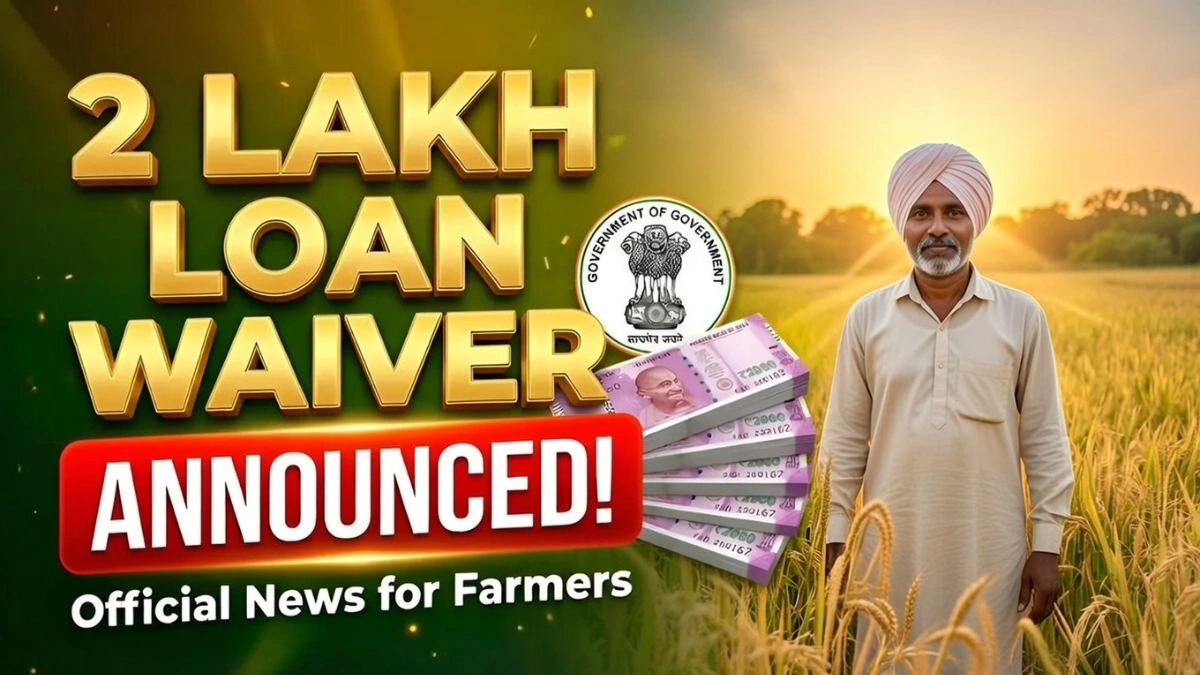
Reports about a ₹2 lakh loan waiver for farmers have triggered widespread interest across rural India. While the relief is real in several cases, it is important to understand that loan waivers are announced and implemented by states, not as a single automatic nationwide benefit. Knowing the exact scope, eligibility and process will help farmers avoid confusion and false promises.
Here is a clear, practical explanation of what this relief actually means.
What the ₹2 Lakh Loan Waiver Is About
The waiver targets eligible agricultural loans, typically crop loans taken from cooperative banks, regional rural banks, and select public-sector banks. The intent is to reduce debt stress for small and marginal farmers facing repeated crop losses, price volatility, or natural calamities.
Policy direction and coordination for agricultural relief sit within the broader framework of the Government of India, while final approval, funding and rollout are handled by state governments.
Is This a Nationwide Waiver
No. There is no single, automatic pan-India waiver that clears ₹2 lakh for every farmer. States announce their own schemes with defined cut-off dates, loan types, and beneficiary lists. Some states cap relief at ₹2 lakh per farmer, while others set different limits or phases.
Always check your state government’s official notification to confirm applicability.
Who Is Usually Eligible
Eligibility commonly focuses on small and marginal farmers holding valid land records who took crop loans for agricultural purposes within a specified period. The loan must generally be institutional, meaning borrowed from recognised banks or cooperatives. Private moneylender loans are usually excluded.
Additional filters such as loan sanction date, outstanding status on a cut-off date, and Aadhaar or account linkage often apply.

Which Loans Are Covered
Most schemes cover short-term crop loans used for seeds, fertilisers and inputs. Some states extend relief to allied activities, but long-term loans, tractor loans, or non-agricultural borrowings are often excluded unless specifically mentioned.
The exact coverage is defined in the state’s scheme document.
How the Waiver Is Applied
Farmers do not receive cash. Once a farmer’s name appears on the approved beneficiary list, the government settles the eligible amount directly with the lending bank. The farmer’s loan account is then adjusted accordingly.
If your bank account or records are mismatched, the credit can be delayed.

What Farmers Should Do Right Now
Farmers should verify land records, ensure bank loan details are accurate, and check whether their Aadhaar and bank accounts are properly linked. Monitoring announcements from the state agriculture department and local revenue offices helps confirm inclusion and timelines.
Avoid middlemen asking for fees. Genuine waivers do not require payment to claim benefits.
What Has Not Been Announced
There is no confirmation of automatic clearance without verification, no waiver for all loan types, and no universal start date across India. Messages claiming instant relief for everyone should be treated cautiously.
Only names in the official beneficiary list receive the waiver.

Why This Relief Matters
For eligible farmers, a ₹2 lakh waiver can significantly ease repayment pressure and free up cash for the next sowing cycle. When implemented properly, it supports continuity in farming and stabilises rural livelihoods during tough seasons.
Conclusion: The ₹2 lakh loan waiver is a meaningful relief where it has been officially announced, but it is state-specific and eligibility-driven. Farmers should confirm their state’s scheme details, keep records updated, and rely only on official sources. Doing so ensures genuine beneficiaries receive timely relief without falling prey to misinformation.
Disclaimer: This article is for informational purposes only. Loan waiver eligibility, coverage and timelines depend on official state government notifications and bank verification. Farmers should consult authorised government portals, local agriculture offices or their banks for final confirmation.