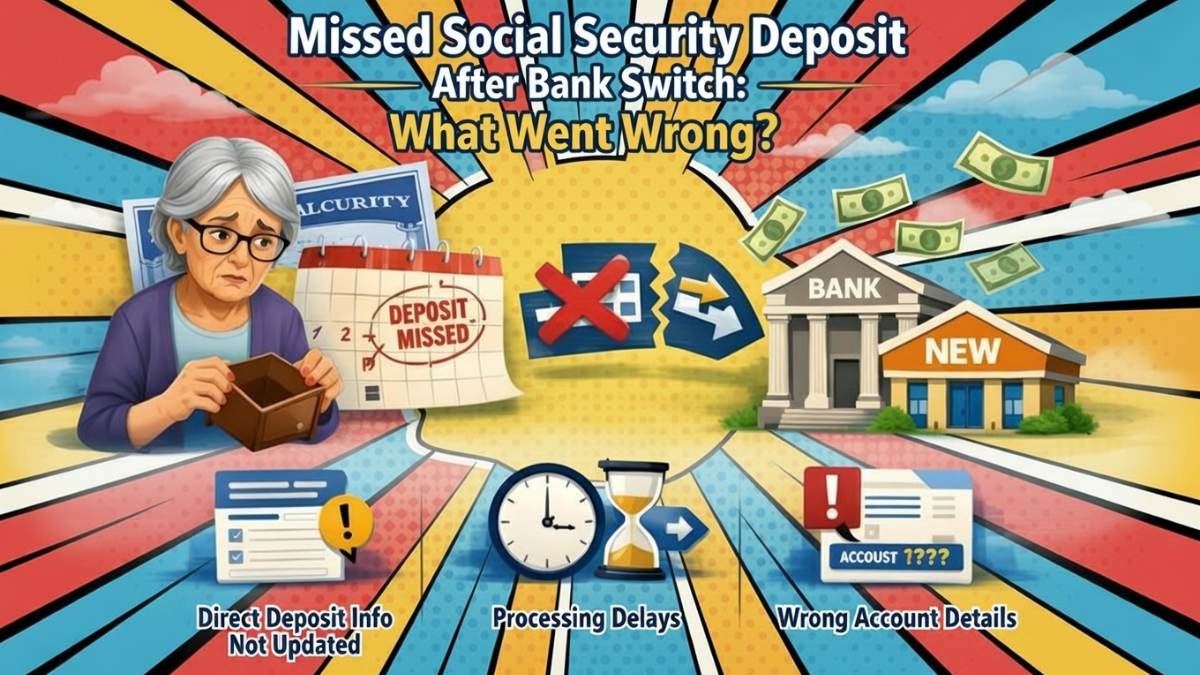
Changing banks can be a smart financial move, but it can also cause temporary delays in your Social Security payment if the update isn’t completed correctly. Many beneficiaries experience missed or late deposits right after switching bank accounts, even though their benefits are still active.
Here’s a clear explanation of why this happens and how to fix it quickly.
How Social Security Payments Are Sent
All Social Security benefits are issued by the Social Security Administration through direct deposit or the Direct Express debit card. When you change banks, the SSA must verify and process your new account details before sending future payments.

Until that process is fully completed, your payment may be delayed or temporarily held.
Timing Is the Most Common Problem
One of the biggest reasons payments don’t arrive after switching banks is timing. If you update your bank information too close to your scheduled payment date, the SSA may not have enough time to apply the change.
In many cases, the payment is sent to the old bank account, rejected, and then returned to the SSA. This adds extra processing time before the payment is reissued.

Old Account Closed Too Soon
Another common mistake is closing the old bank account before the first payment successfully reaches the new one. If the SSA sends your benefit to a closed account, the deposit fails and must be manually reprocessed.
This can delay your payment by several business days or longer.
Verification and Security Checks
For security reasons, the SSA may place a short hold on payments after bank changes to prevent fraud. This is more likely if multiple account changes were made recently or if the update was done by phone instead of through your official online account.

These checks protect your benefits but can temporarily slow things down.
What You Should Do If Your Payment Didn’t Arrive
First, log in to your official SSA online account and confirm that your new bank details are correct and fully saved. Check whether the payment shows as sent or pending.
If the payment was issued but not received, contact your bank to see if there is a pending or rejected deposit. If three business days have passed since your payment date with no resolution, contact the SSA directly.

How to Avoid Problems When Switching Banks
To prevent delays, always update your bank information at least two to three weeks before your next payment date. Keep your old bank account open until you confirm the first successful deposit into the new account.
Double-check routing and account numbers carefully, and avoid making multiple changes within a short period.
Important Reminder About Scams
Scammers often take advantage of payment delays. The SSA will never call, text, or email asking for your full bank details or threatening to stop benefits. Always use official SSA channels when updating or confirming payment information.

Conclusion: Switching banks doesn’t cancel your Social Security benefits, but it can temporarily delay your payment if changes aren’t timed or processed correctly. Most issues are resolved automatically once the SSA verifies your new account. Planning ahead and keeping your old account open briefly can help ensure your benefits continue without interruption.
Disclaimer: This article is for informational purposes only and does not constitute legal or financial advice. Social Security payment procedures and timelines may change. Beneficiaries should consult official Social Security Administration resources or representatives for guidance specific to their situation.