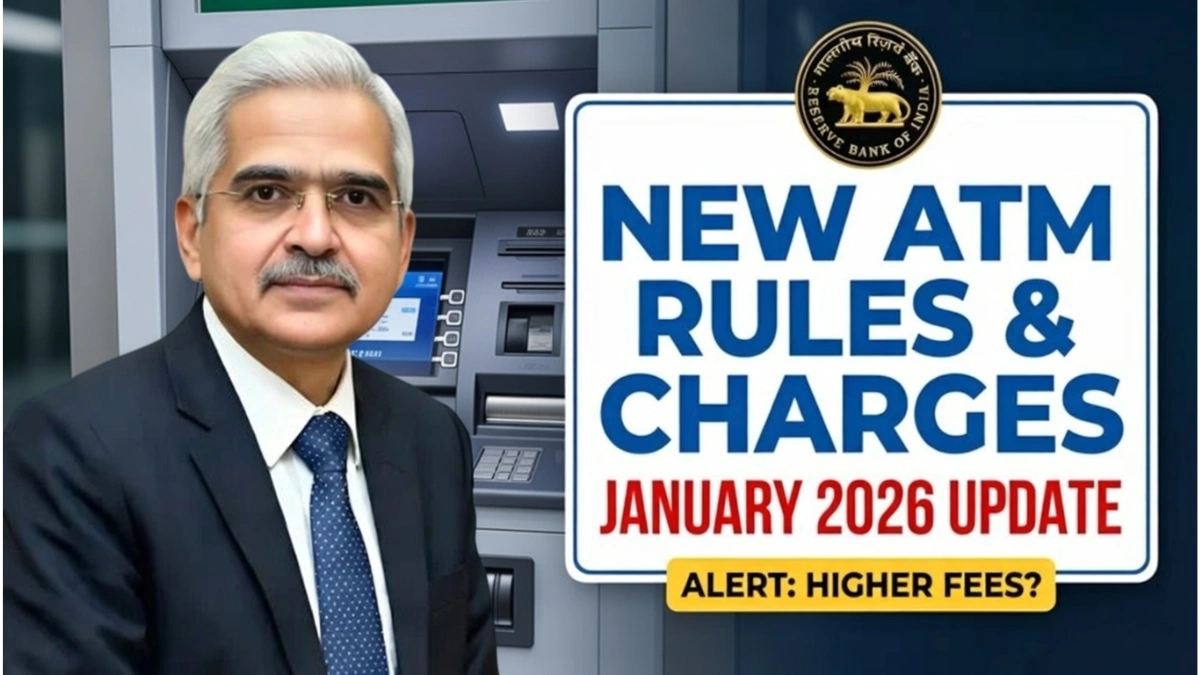
ATM Transaction Rules Updated for 2026: Bank customers across India are seeing important changes in ATM usage rules in 2026, as revised guidelines around withdrawal limits and charges come into effect. These updates impact how many free transactions users get each month and how much they may pay once those limits are crossed. Understanding the new structure can help avoid unnecessary fees.
Why ATM Charges Were Revised in 2026
The changes have been introduced following cost-related representations from banks and white-label ATM operators. Rising operational expenses, cash handling costs, and infrastructure maintenance prompted a review of existing ATM fee norms by the Reserve Bank of India.
The objective is to balance customer convenience with the sustainability of ATM networks.

Free ATM Transactions: What Remains Unchanged
In 2026, customers continue to get a fixed number of free ATM transactions per month, which include both financial and non-financial transactions.
In metro cities, users are generally entitled to five free transactions at their own bank’s ATMs and three free transactions at other banks’ ATMs. In non-metro locations, the free limit at other bank ATMs is typically higher.
Once these free transactions are exhausted, charges apply.

Revised ATM Withdrawal Charges Explained
After crossing the free transaction limit, banks are allowed to charge customers a higher fee per transaction than earlier years. The revised fee usually includes a fixed amount per transaction, along with applicable taxes.
This fee applies not only to cash withdrawals but also to certain balance inquiries and mini-statement requests once the free quota is used up.
Cash Withdrawal Limits and Daily Caps
Banks continue to impose daily cash withdrawal limits, which vary based on account type, debit card category, and bank policy. While RBI provides the regulatory framework, individual banks decide the exact per-day withdrawal cap for their customers.

Premium account holders may enjoy higher limits, while basic savings accounts may have stricter caps.
Impact on Urban and Rural Customers
Customers in rural and semi-urban areas are generally less affected due to higher free transaction allowances at non-home branch ATMs. Urban customers, especially those relying heavily on ATMs in metro cities, may notice increased charges if they exceed monthly limits.
Digital banking adoption is being indirectly encouraged to reduce dependency on physical cash withdrawals.

How Customers Can Avoid Extra ATM Fees
To minimize charges, customers can plan withdrawals to reduce frequency, use their home bank ATMs whenever possible, and rely more on digital payment methods. Many banks also provide transaction alerts and monthly summaries that help track ATM usage.
Checking your bank’s specific ATM policy is essential, as charges can vary slightly between institutions.
What Banks Are Advising Customers
Banks are encouraging customers to shift routine transactions to UPI, mobile banking, and internet banking platforms, which remain free and available 24×7. ATM usage is being positioned more for essential cash needs rather than frequent withdrawals.

Conclusion: ATM rule changes in 2026 mean customers need to be more mindful of how often they withdraw cash. While free transaction limits still exist, exceeding them can now be costlier than before. Staying informed about your bank’s ATM policy and using digital alternatives wisely can help you manage expenses and avoid surprise charges.
Disclaimer: This article is for general informational purposes only. ATM charges, free transaction limits, and withdrawal caps may vary by bank, account type, and location. Customers should refer to their respective bank’s official communication for exact details.