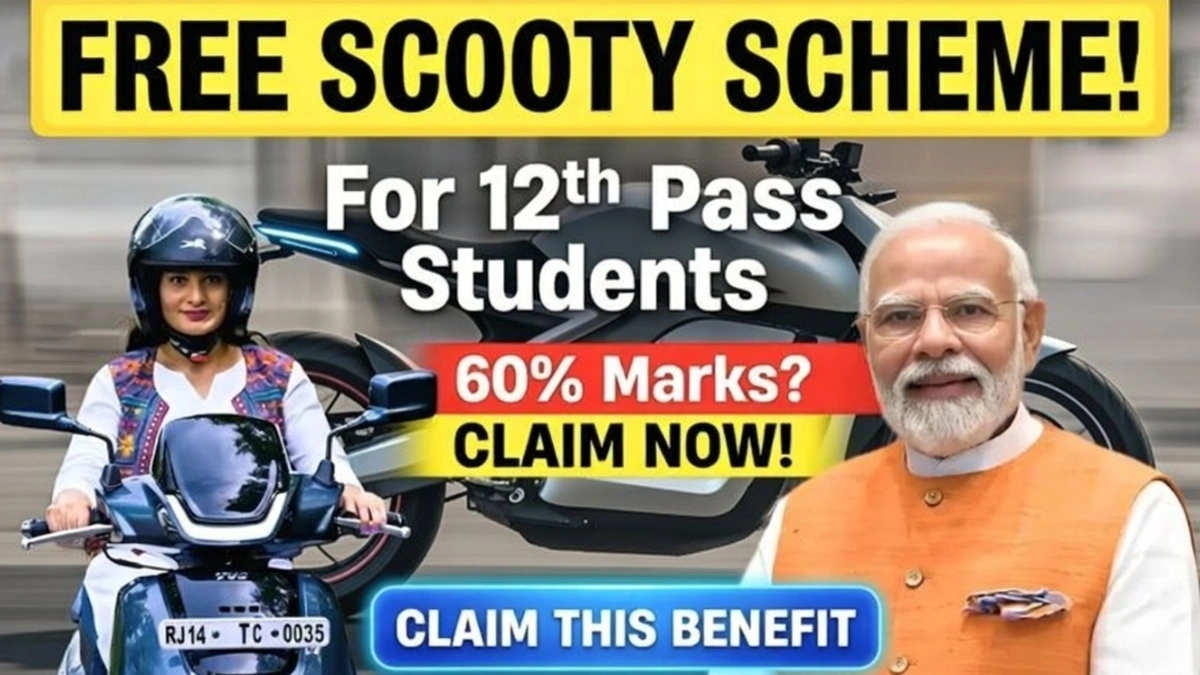
A major education-linked welfare move in 2026 is drawing attention as free scooty schemes for 12th pass students resurface across multiple states. What’s catching everyone’s eye is the minimum eligibility benchmark of around 60% marks, making the benefit accessible to a much larger group of students than before.
This initiative is aimed at improving mobility, college attendance, and safety, especially for students from rural and semi-urban areas.
What the Free Scooty Scheme Is About
The free scooty programme is designed to support students who have completed Class 12 and are enrolling in higher education. By providing a two-wheeler at no cost, governments aim to reduce daily travel challenges and drop-out rates.
These schemes are implemented at the state level under broader education and women-empowerment policies led by respective state administrations, with policy direction aligned to national welfare goals of the Government of India.
Why 60% Marks Is a Big Deal
Earlier versions of similar schemes often required very high academic scores, limiting eligibility to top performers only. In 2026, several states have relaxed the criteria, setting 60% in Class 12 as sufficient eligibility, provided other conditions are met.
This change makes the benefit more inclusive, especially for students who are academically capable but not top rankers.
Who Can Apply for the Free Scooty
Eligibility typically includes students who have passed Class 12 from a recognised board, secured at least the minimum qualifying percentage, and are admitted to a college or higher education institution. Many schemes prioritise girl students, while some are open to all eligible students.
Additional conditions may include domicile status, income limits, and category-based reservations depending on the state.

How the Benefit Is Provided
Instead of giving cash, governments usually provide an actual scooty or reimburse the cost directly to the dealer. This ensures the benefit is used strictly for mobility and not diverted elsewhere.
Registration, document verification, and final allotment are handled through official education or social welfare portals.
Why This Scheme Matters in 2026
With rising transport costs and limited public transport in many regions, commuting becomes a major barrier to education. A free scooty significantly reduces this burden, especially for female students who may otherwise face safety or accessibility issues.
The scheme directly supports higher education participation and independence.

What Students and Parents Should Do Now
Students should keep their Class 12 marksheets, admission proof, Aadhaar, and income certificates ready. Monitoring official state education department notifications is crucial, as application windows are usually time-bound.
Avoid relying on unofficial agents or paying any fees, as legitimate applications are processed only through government portals.
What Has Not Been Announced
There is no single nationwide free scooty scheme applicable automatically to all students. Benefits vary by state, and meeting the marks criteria alone does not guarantee approval. Claims promising instant delivery without application are misleading.
Verification remains mandatory.

Conclusion: The Free Scooty Scheme for 12th pass students in 2026 is a meaningful step toward making higher education more accessible and practical. With eligibility relaxed to around 60% marks in many cases, thousands of students now have a real chance to benefit. For families balancing education costs, this scheme offers mobility, independence, and opportunity rolled into one.
Disclaimer: This article is for informational purposes only. Free scooty schemes, eligibility criteria, and application processes vary by state and are subject to official government notifications. Students should verify details through authorised state education or welfare department portals.