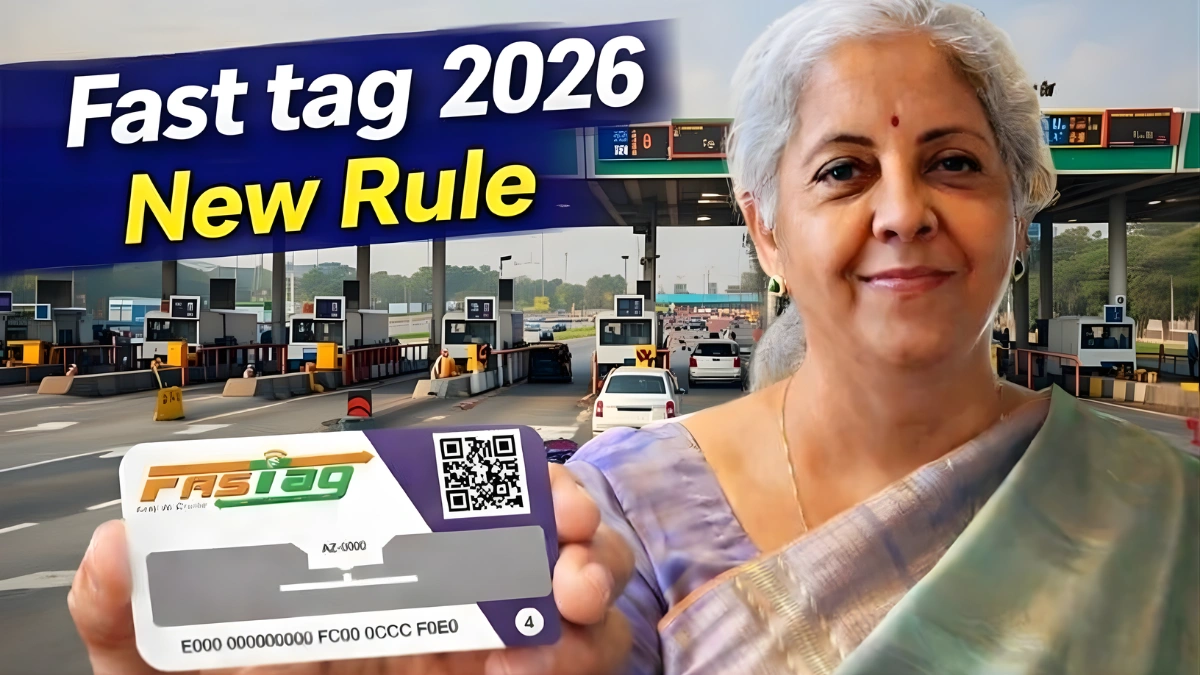
The FASTag policy for 2026 brings clearer rules, stricter enforcement, and smoother toll collection across Indian highways. With the government pushing for 100% electronic tolling, the new guidelines aim to reduce congestion, prevent misuse, and improve transparency for vehicle owners.
If you use national highways, these updates directly affect how you pay tolls and manage your FASTag.
Who Regulates FASTag in India
FASTag is implemented under the supervision of the National Highways Authority of India, in coordination with banks and toll operators. Policy directions are issued at the national level, while execution happens at individual toll plazas.
What’s New in the FASTag Policy 2026
The 2026 update strengthens enforcement of existing rules rather than introducing an entirely new system. Key focus areas include:
Stricter checks on inactive or low-balance FASTags
Mandatory FASTag usage at all national highway toll plazas
Faster penalty action for rule violations
Improved grievance redressal and refund timelines
Vehicles without a valid FASTag face higher penalties than before.
FASTag Charges and Penalties in 2026
There is no new uniform FASTag fee introduced in 2026. However, penalties for non-compliance are strictly enforced:
Vehicles without FASTag or with invalid FASTag may have to pay double the applicable toll fee.
Low-balance or blacklisted FASTags can lead to delays or penalty charges at toll plazas.

Banks may continue to charge nominal issuance or replacement fees, depending on the provider.
Rules on FASTag Balance and Validity
Maintaining sufficient balance is now more important than ever. Toll plazas are equipped to detect low-balance FASTags, and vehicles may be stopped or penalized if payment fails.
Expired, damaged, or improperly placed FASTags can also result in toll issues. FASTag must be correctly affixed on the vehicle windshield as per guidelines.
Mandatory FASTag for Which Vehicles
FASTag is compulsory for all four-wheelers and above using national highways. New vehicle registrations already come with FASTag, and existing vehicles must ensure their tag is active and linked to a valid bank account or wallet.

Exemptions are extremely limited and strictly regulated.
Refunds, Errors and Complaint Handling
In case of incorrect toll deductions, the 2026 guidelines emphasize faster complaint resolution. Users can raise issues through their FASTag issuing bank or official toll apps. Refunds for genuine errors are usually processed within a defined timeframe.
Keeping transaction alerts enabled helps track toll deductions accurately.
What Vehicle Owners Should Do Now
Check your FASTag status and balance regularly
Ensure your FASTag is properly fixed and not damaged
Avoid using multiple FASTags for a single vehicle
Update KYC details with your FASTag issuer

These simple steps can help avoid penalties and delays.
Why the Government Tightened FASTag Rules
The updated policy supports India’s goal of seamless, cashless toll collection. By enforcing FASTag rules more strictly, authorities aim to reduce toll evasion, improve traffic flow, and enhance transparency in highway revenue systems.
Conclusion: The FASTag New Policy 2026 does not drastically change charges, but it significantly tightens compliance. With stricter penalties for non-use, low balance, or invalid tags, vehicle owners must stay vigilant. Maintaining an active FASTag with sufficient balance is now essential for smooth and penalty-free highway travel.
Disclaimer: This article is for informational purposes only. FASTag rules, penalties, and procedures may change based on official notifications. Vehicle owners should always refer to updates issued by NHAI, their FASTag issuing bank, or official government portals for the latest information.