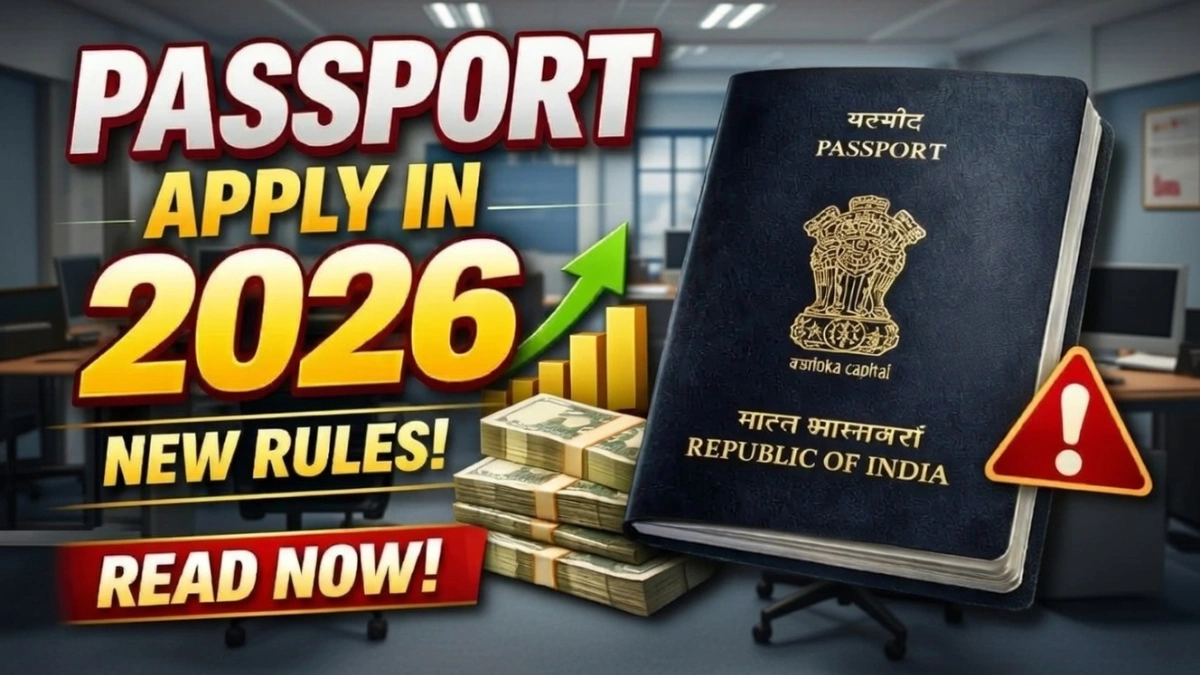
Passport Rules Overhauled in 2026: The passport system in India has received important updates in 2026, affecting how citizens apply, verify documents, and complete the process online. These changes are aimed at faster processing, better security, and reduced errors, but they also mean applicants must be more careful than before.
Here is a complete, easy-to-understand explanation of the new passport rules, required documents, and the updated online application process.
Why Passport Rules Were Updated in 2026
With rising international travel and increased security requirements, the government has strengthened passport issuance norms. The focus is on digital verification, accurate documentation, and quicker police verification, reducing delays caused by mismatched or incomplete records.
The passport system operates under the Ministry of External Affairs, which oversees passport issuance nationwide.

What Has Changed in Passport Rules
In 2026, greater emphasis has been placed on Aadhaar-linked identity verification and accurate address records. Applications with inconsistent personal details are now more likely to face delays or re-verification. The system also flags duplicate or conflicting data automatically.
Tatkal and normal passport categories continue, but scrutiny levels have increased.
Updated Document Requirements
Applicants must submit valid proof of identity, date of birth, and address. Aadhaar is widely accepted as identity proof, but address proof must match current residence details. Any recent address change must be supported by valid documentation.
For minors, parental documents and consent are checked more strictly than before.

Online Application Process Explained
Passport applications in 2026 are primarily processed online. Applicants must register, fill out the form accurately, upload required details, pay fees digitally, and book an appointment at a passport service centre. Errors in spelling, date of birth, or address can result in rejection or re-appointment.
Double-checking entries before submission is now crucial.
Police Verification Rules in 2026
Police verification remains mandatory in most cases. However, digital record sharing has reduced verification time for applicants with clean records and consistent documentation. Any mismatch between application data and local records can delay approval.
Applicants should ensure availability at the address provided during verification.

Tatkal Passport Updates
Tatkal passports are still available, but documentation checks have become stricter. Any incorrect or incomplete document submission can lead to Tatkal rejection, even after fee payment.
Tatkal does not bypass verification, it only prioritises processing.
What Has Not Changed
There is no ban on issuing passports in 2026. Valid existing passports remain unaffected until expiry. There is also no requirement for reapplication unless details change or the passport expires.
Claims about compulsory re-verification for all passport holders are false.

Common Mistakes to Avoid
Many applications are delayed due to spelling errors, mismatched addresses, or outdated documents. Uploading unclear documents or ignoring appointment instructions can also cause problems.
Careful preparation saves time and repeat visits.
Why This Update Matters for Applicants
With stricter digital scrutiny, passports are issued faster for applicants who submit accurate information, but delays are harsher for mistakes. Being well-prepared is now the biggest advantage.
The changes are meant to reward accuracy, not complicate the process.

Conclusion: The Passport Update 2026 brings a more digital, secure, and streamlined system, but it also demands higher accuracy from applicants. Understanding the new rules, keeping documents updated, and following the online process carefully can help avoid delays and ensure smooth passport issuance.
Disclaimer: This article is for informational purposes only. Passport rules, document requirements, and procedures are subject to official notifications issued by the Ministry of External Affairs. Applicants should rely on authorised passport portals and government communications for final instructions.