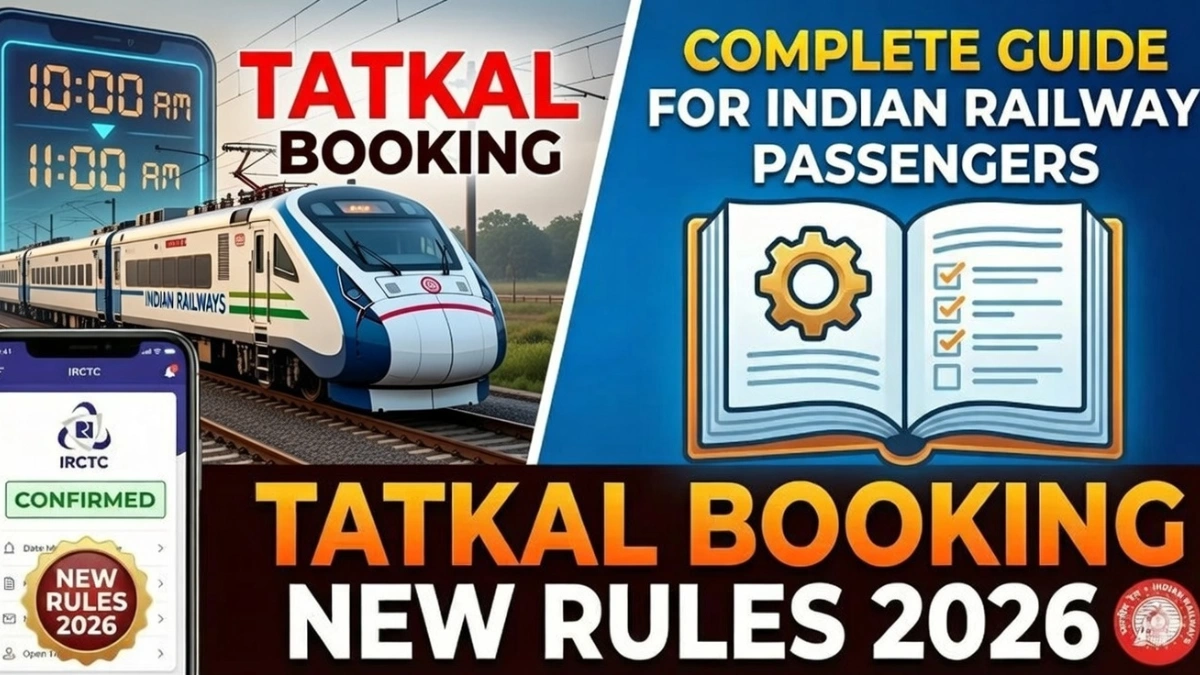
Train Travel Alert 2026: Passengers who rely on Tatkal tickets for urgent train travel are facing tougher conditions in 2026. Revised guidelines have changed how Tatkal bookings work, making the process more competitive and far more disciplined than before. The aim is to reduce misuse, curb agent dominance, and ensure fair access for genuine travellers.
Here is a clear explanation of what has changed and how it affects passengers.
Why Tatkal Rules Were Tightened in 2026
Tatkal bookings have long been affected by heavy traffic, automated tools, and agent-driven bulk bookings. To address these issues, Indian Railways has strengthened controls to prioritise real users and improve transparency.
The focus is not on reducing Tatkal seats, but on ensuring they reach passengers with genuine last-minute needs.
Stricter Booking Timelines and Controls
Under the revised framework, Tatkal bookings are monitored more closely during the opening minutes. Multiple rapid attempts, suspicious patterns, and automated behaviour are now flagged more aggressively. This means passengers must book carefully, accurately, and without repeated retries.
Errors or delays during booking can now result in lost chances, as the system moves faster and stricter than before.
Higher Emphasis on Verified User Accounts
In 2026, greater importance is placed on verified IRCTC user accounts. Accounts with incomplete details or inconsistent login activity may experience slower access or failed bookings during peak Tatkal windows.
Passengers using properly verified accounts with updated details have a better chance of successful booking.

Agents and Automated Bookings Face Stronger Restrictions
One of the biggest changes is tougher action against unauthorised agents and software tools. Indian Railways has enhanced detection mechanisms to block automated scripts and mass bookings that previously consumed a large share of Tatkal tickets within seconds.
This makes Tatkal booking fairer, but also more competitive for individuals booking manually.
No Change in Tatkal Charges, But Less Margin for Error
While Tatkal charges themselves have not increased, the booking process leaves little room for mistakes. Incorrect passenger details, slow payment confirmation, or unstable internet connections can lead to instant booking failure.
Preparation before the booking window opens is now essential.

What Has Not Changed
Tatkal tickets are still available one day before the journey date, and the quota size remains route-dependent. There is no complete removal of Tatkal booking, and no blanket ban on online reservations.
Claims suggesting Tatkal has been discontinued are false.
How Passengers Can Improve Booking Success
Passengers should log in early, keep passenger details saved, use stable internet, and avoid refreshing repeatedly during booking. Payment options should be ready in advance to reduce transaction delays.
Booking from official platforms only is strongly advised.

Why These Changes Matter for Travellers
With millions depending on Tatkal for emergencies, fairness and transparency are critical. While the new rules make booking tougher, they also reduce unfair advantages and increase the chances for genuine users who prepare properly.
Tatkal is no longer about speed alone, but about accuracy and readiness.
Conclusion: The Tatkal ticket guideline update for 2026 has made last-minute train bookings more challenging but also more transparent. With stricter monitoring, better agent control, and tighter systems, passengers must be more prepared than ever. Those who adapt to the new process will still be able to secure tickets, but casual or rushed attempts are far less likely to succeed.
Disclaimer: This article is for informational purposes only. Tatkal booking rules and enforcement measures are subject to official notifications issued by Indian Railways and IRCTC. Passengers should check official railway portals for the latest confirmed guidelines.